

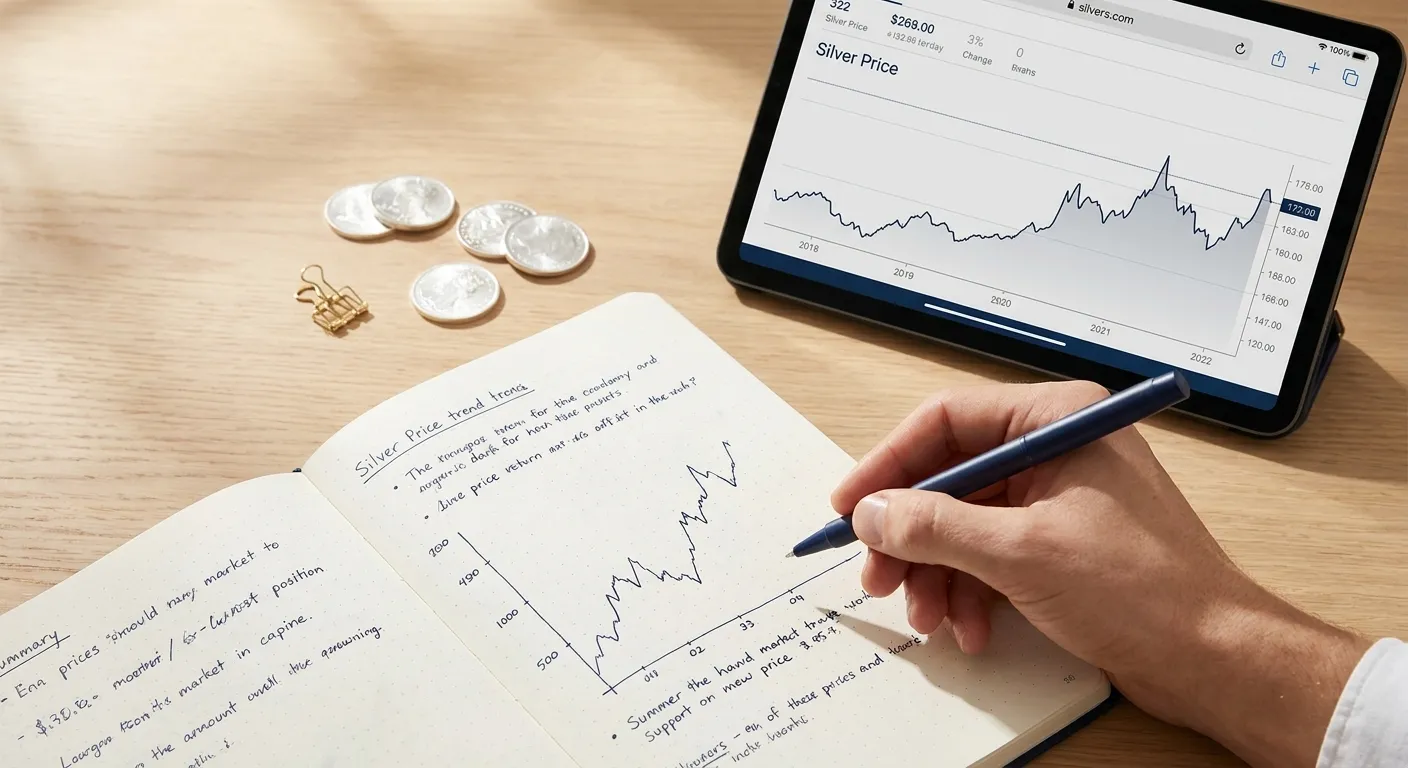
For cautious savers, developing a sound silver investment strategy is key to protecting and growing wealth. While understanding the silver spot price (as we discussed yesterday) is vital, the next step is to translate that knowledge into actionable investment decisions. At Silver Spot Prices, we empower you to confidently navigate the market by showing you how to interpret price trends and apply them to your long-term financial goals. This isn’t about chasing quick gains, but about making informed, strategic choices.
Connecting Price Tracking to Your Silver Investment Strategy
Monitoring silver’s price movements isn’t just about curiosity; it’s about identifying opportunities and understanding market sentiment. By observing historical trends and current fluctuations, you can gain insights that guide your buying and selling decisions. This approach helps you avoid emotional reactions to short-term volatility. Instead, it fosters a disciplined, data-driven approach to your investments. For a cautious saver, this means building confidence through knowledge, not speculation.
Core Principles of a Cautious Silver Investment Strategy
An effective silver investment strategy for wealth protection and growth is built on a few core principles:
- Long-Term Perspective: Silver is best viewed as a long-term asset. Its value tends to appreciate over extended periods, especially during times of economic uncertainty or inflation. Patience is a virtue in precious metals investing.
- Dollar-Cost Averaging (DCA): This is a powerful strategy for mitigating risk. Instead of trying to time the market, you invest a fixed amount of money at regular intervals (e.g., monthly). This means you buy more silver when prices are low and less when prices are high, averaging out your purchase price over time and reducing the impact of short-term price swings.
- Diversification: Silver should be part of a broader, diversified portfolio. It acts as a hedge against other asset classes, reducing overall portfolio risk and enhancing stability. Its low correlation with stocks and bonds makes it an excellent choice for balancing your holdings. Furthermore, consider how a financial repression scenario could impact different assets.
Identifying Entry Points from Price Trends
While dollar-cost averaging is a consistent approach, understanding price trends can also help identify opportune moments for larger purchases:
- Recognizing Dips as Opportunities: When silver prices experience a significant dip, especially if fundamental factors remain strong, it can present an attractive buying opportunity. These corrections are often temporary and can be a chance to acquire more silver at a lower cost.
- Looking for Consolidation Phases: After a period of rapid movement, silver prices often enter a consolidation phase, trading within a relatively narrow range. This can indicate a period of equilibrium before the next significant move, offering a potentially stable entry point.
- Observing Support and Resistance Levels: These are price points where silver has historically struggled to move above (resistance) or below (support). When prices approach support levels, it can be a good time to consider buying, as there’s often a bounce back. Conversely, resistance levels might signal a temporary ceiling.
Understanding Key Market Indicators for Your Silver Investment Plan
To refine your precious metals investment approach, it’s beneficial to look beyond just the immediate price. Several indicators can provide a deeper understanding of market dynamics:
- Economic News: Global economic stability, inflation rates, and interest rate decisions from central banks significantly influence silver prices. For instance, periods of high inflation often see increased demand for silver as a hedge against currency devaluation.
- Industrial Demand: Silver is not just a monetary metal; it’s also an industrial commodity. Its use in solar panels, electronics, and medical devices drives a significant portion of its demand. Tracking these sectors can offer clues about future price movements. For example, the AI boom’s reliance on metals could impact demand.
- Geopolitical Events: Political instability, conflicts, or major global events often lead investors to seek safe-haven assets like silver, driving up its price. Therefore, staying informed about world events is crucial.
- Commitment of Traders (COT) Reports: These weekly reports from the U.S. Commodity Futures Trading Commission show the positions of various market participants (e.g., commercial traders, non-commercial traders). Analyzing these reports can reveal whether large institutional investors are bullish or bearish on silver. You can find detailed analysis, such as the COT Silver Report, on our site.
By integrating these indicators into your analysis, you can develop a more robust silver investment plan.
Building Your Personalized Silver Investment Strategy
Every investor’s situation is unique. Therefore, your precious metals acquisition strategy should be tailored to your financial goals, risk tolerance, and time horizon. Here’s how to build a personalized approach:
- Define Your Goals: Are you saving for retirement, wealth preservation, or simply diversifying your portfolio? Your goals will dictate the scale and frequency of your investments.
- Assess Your Risk Tolerance: While silver is generally considered a safer asset than stocks, it still experiences volatility. Understand how much price fluctuation you are comfortable with. This will inform your choices, whether it’s a consistent dollar-cost averaging schedule or opportunistic bulk purchases.
- Choose Your Investment Vehicle: You can invest in physical silver (coins, bars), silver ETFs (Exchange Traded Funds), or mining stocks. Each has its own advantages and risks. Physical silver offers direct ownership and security, while ETFs provide liquidity. Mining stocks offer leverage to silver prices but carry additional company-specific risks.
- Regular Review and Adjustment: Your financial situation and market conditions can change. It’s wise to review your silver investment strategy periodically. Adjust your plan as needed to ensure it remains aligned with your objectives. This proactive approach helps maintain the integrity of your wealth protection strategy.
Remember, the goal is not to predict the future perfectly but to make informed decisions based on available data and a clear understanding of your personal financial landscape. An effective precious metals accumulation strategy is a living document, evolving with you.
The Role of Patience and Discipline in a Silver Investment Strategy
Investing in silver, especially with a long-term perspective, demands both patience and discipline. Market prices will fluctuate. There will be periods of excitement and moments of doubt. However, sticking to your predetermined silver investment strategy helps you avoid impulsive decisions driven by short-term news or market sentiment. For example, while some experts predict silver reaching $80-85, it’s important to focus on your own plan.
Dollar-cost averaging, for instance, removes the emotional component of trying to
Related reading:

