

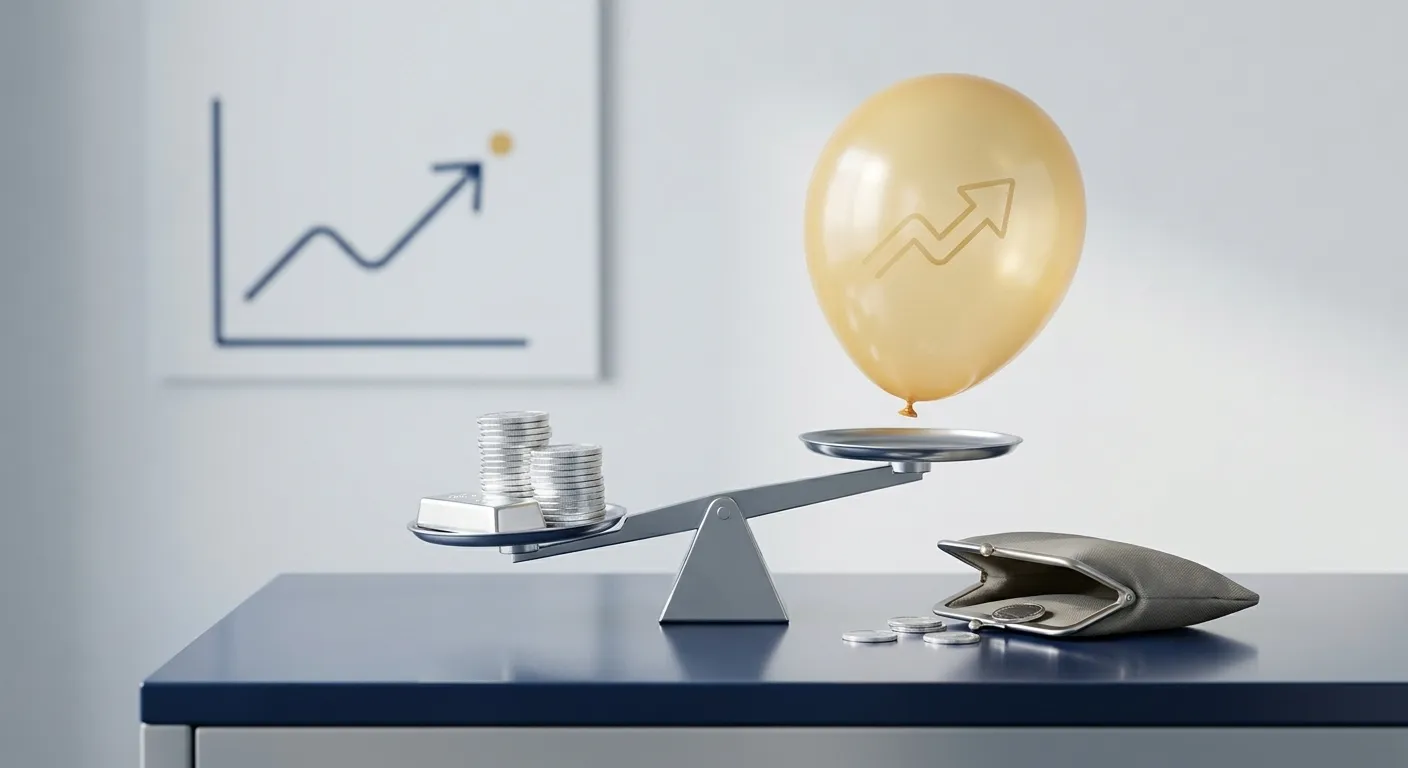
Many cautious savers like Sarah are increasingly concerned about protecting their hard-earned savings from the eroding effects of inflation and economic uncertainty. You’ve worked diligently to build your financial security, and now you want to ensure it’s safeguarded. This is where the concept of a silver inflation hedge becomes incredibly relevant, offering a tangible solution for wealth preservation.
Why Silver Stands Out as a Safe Haven Asset
Precious metals have historically served as a refuge during turbulent economic times, and silver is no exception. It’s a tangible asset, meaning its value isn’t solely dependent on the stability of a government or a single company. When currencies weaken due to inflation or when geopolitical tensions rise, investors often flock to assets like silver, driving up its demand and value.
Central banks, traditionally buyers of gold, have also been increasing their gold reserves, signaling a broader trend towards tangible asset accumulation. Notably, Russia formally included silver in its state reserve program for 2025-2027, underscoring a growing perception of silver’s strategic value on a global scale. This institutional recognition further solidifies silver’s role as a reliable asset.
The 2025-2026 Surge: A Clear Indicator of Silver’s Potential
To truly understand silver’s power as an inflation hedge, we need only look at recent history. The period of 2025-2026 provided a compelling case study:
- Remarkable Gains: Silver experienced a dramatic surge in 2025, hitting a new all-time high spot price of $55.51 per ounce in October, marking a gain of over 60% by year-end. This growth continued, reaching a nominal all-time high of $121.64 per ounce in January 2026 before correcting to the mid-$70s by June 2026, trading around $64.83/oz. The approximately 147-149% increase in 2025 alone significantly outperformed most other commodities and even the stock market.
- Response to Uncertainty: This dramatic performance wasn’t accidental. It occurred amidst ongoing global economic shifts and geopolitical tensions, such as the Middle East conflict. These factors naturally push investors towards safe-haven assets, highlighting silver’s role as a protective shield for capital.
- Accessibility: Silver’s lower price per ounce compared to gold makes it a more accessible entry point for first-time and budget-conscious investors. This increased accessibility, even seeing retail giants like Costco selling silver bars, means more individuals can utilize silver as an effective silver inflation hedge.
How Silver Protects Against Inflation
Inflation erodes the purchasing power of traditional currency. If your money is sitting in a savings account earning 1%, but inflation is at 5%, your wealth is effectively shrinking. Silver, as a physical commodity, tends to retain or increase its value during inflationary periods. Its intrinsic value is not tied to any government’s fiscal policy. Therefore, it provides a tangible store of wealth.
Historically, when the cost of living rises and currencies devalue, the demand for precious metals often increases. This is because people seek assets that can maintain their purchasing power. Silver’s dual role as an industrial metal and a monetary asset makes it particularly resilient. For example, its use in solar panels, electronics, and medical applications creates constant industrial demand, establishing a strong price floor. Meanwhile, its role as a monetary metal offers protection against economic instability.
Understanding Silver’s Historical Performance
Looking back, silver has consistently demonstrated its ability to act as a store of value. During the inflationary periods of the 1970s, for instance, silver prices soared dramatically. More recently, during the financial crisis of 2008 and the subsequent quantitative easing, silver again showed significant gains. These historical trends offer compelling evidence of silver’s potential to preserve wealth when economic conditions are challenging.
Consider the broader economic landscape. Governments worldwide have been engaging in expansive monetary policies, often leading to increased money supply. This can dilute the value of existing currency, making a strong case for holding tangible assets. For many, silver offers a straightforward way to diversify their holdings and protect against these macro-economic trends. You can learn more about general investment strategies in our Investment Guides section.
The Dual Demand for Silver: Industrial and Investment
Silver’s unique position stems from its dual demand drivers: industrial use and investment demand. Industrially, silver is indispensable. It’s used in solar energy, medical devices, electronics, and automotive industries. As technology advances and green energy initiatives expand, industrial demand for silver is projected to grow significantly. This constant, fundamental demand provides a robust foundation for its price.
On the investment side, silver is often seen as