

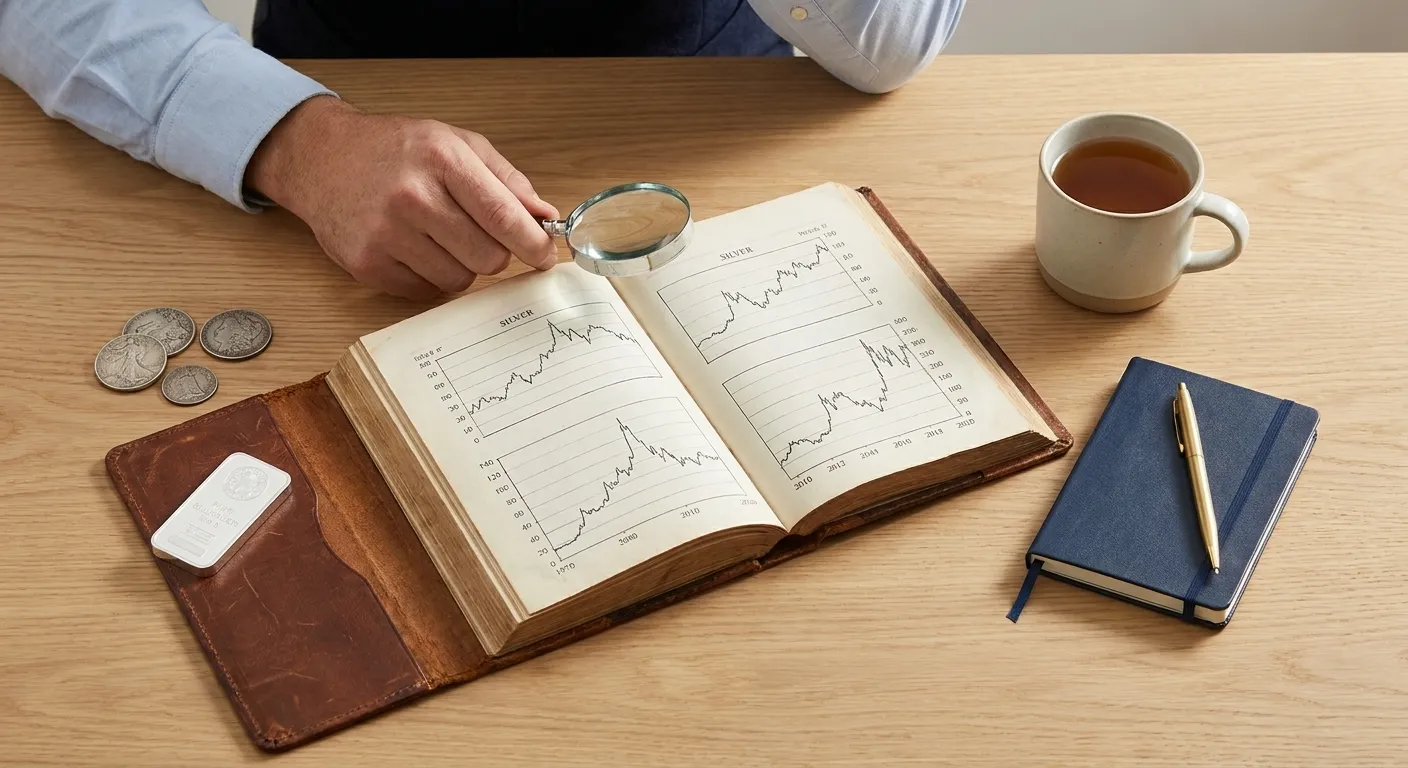
For cautious savers, gaining confidence in precious metals often starts with interpreting silver price history to understand its long-term role in wealth protection. While daily fluctuations can seem daunting, a broader view reveals patterns and resilience that are invaluable for anyone considering silver as part of their financial strategy. This historical perspective helps to contextualize current prices and foster a confident approach to your investment journey.
Why Look at Silver’s Past Performance?
Understanding historical silver movements isn’t about predicting the future with certainty. Instead, it’s about recognizing trends, identifying key support and resistance levels, and appreciating silver’s behavior during different economic cycles. It provides a foundation for realistic expectations. Moreover, it helps you avoid making emotional decisions based on short-term market noise. For a cautious saver, seeing how silver has performed through various periods of inflation, economic growth, and recession offers reassurance and clarity.
Key Eras in Silver’s Historical Journey
Silver’s price history is marked by periods of significant movement, often tied to global economic and geopolitical events. Each era offers valuable insights into its role as a store of value.
The 1970s Inflation Spike
During a decade of high inflation and economic uncertainty, silver, like gold, saw substantial price increases. This clearly demonstrated its role as an inflation hedge. Consequently, many investors turned to precious metals to protect their purchasing power.
The 2008 Financial Crisis
As global financial markets faced unprecedented turmoil, investors flocked to safe-haven assets. Silver experienced a dip initially, however, it then rallied strongly as confidence in traditional financial systems wavered. This period highlights silver’s appeal during times of financial instability.
The 2011 Peak
Silver reached a multi-decade high, driven by a combination of high industrial demand, a weak U.S. dollar, and significant investment interest following the financial crisis. This peak illustrated the potential for significant gains under specific market conditions.
The 2020 Pandemic Response
In the initial panic of the COVID-19 pandemic, silver saw a sharp but brief decline. It quickly recovered and then surged as central banks globally implemented massive stimulus measures. This led to concerns about inflation and currency debasement. Furthermore, this recent history provides a clear example of silver’s quick recovery and subsequent growth in uncertain times.
Each of these periods illustrates how silver reacts to different macro-economic pressures. This reinforces its value as a diversifier and a protector of purchasing power. Therefore, understanding these historical reactions is crucial for any long-term investor.
Interpreting Silver Price History: Identifying Long-Term Trends vs. Short-Term Noise
When interpreting silver price history, it’s crucial to distinguish between long-term trends and short-term volatility. Silver, like all commodities, experiences daily and weekly price swings. These short-term movements are often driven by speculative trading, minor news events, or temporary shifts in supply and demand.
For cautious savers focused on wealth protection, the long-term trend is far more significant. Over decades, silver has demonstrated its ability to preserve capital and grow wealth, particularly during periods of economic instability. For example, consider the insights from 40 Trillion in Debt and Financial Repression Is the Only Exit, which underscores the systemic pressures that can drive demand for precious metals over time. Moreover, the long view helps to filter out the
Related reading:

