
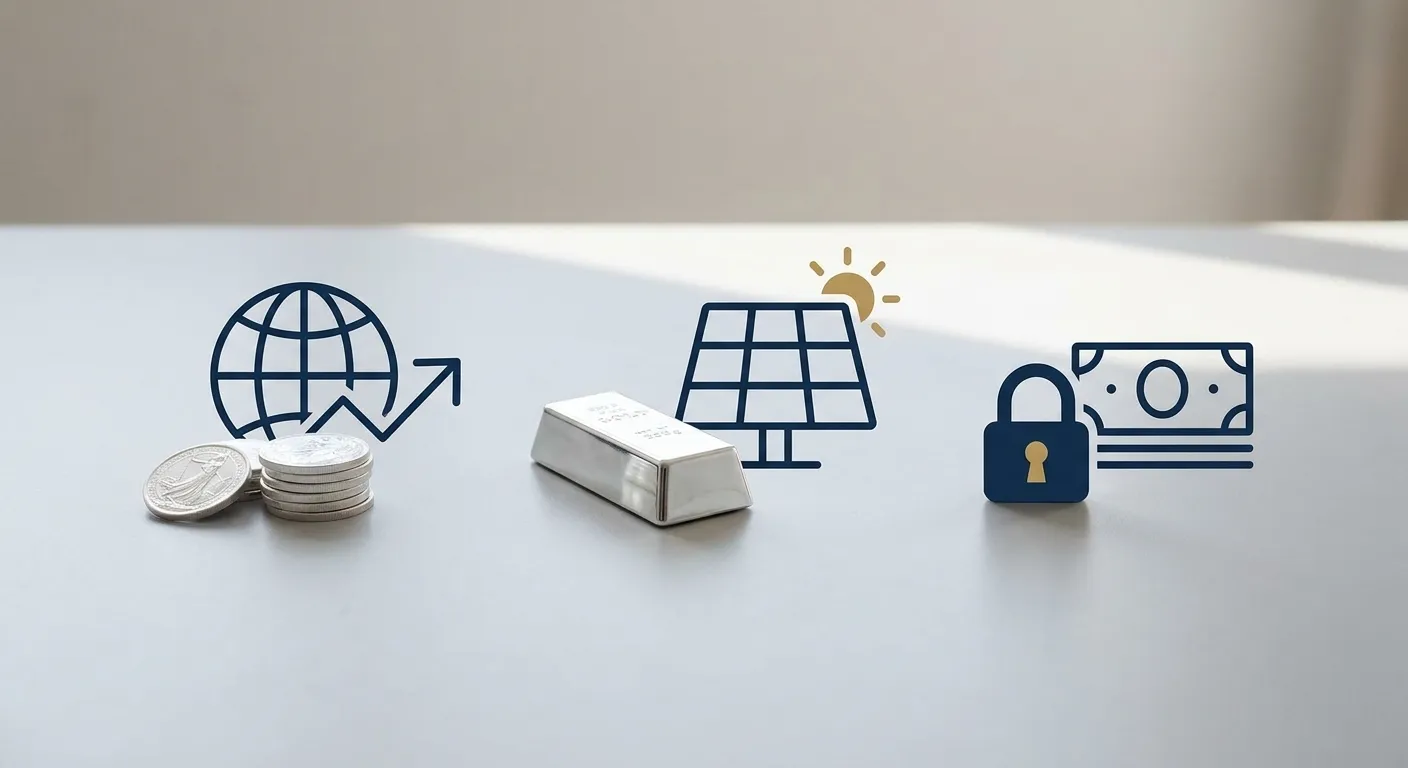
For cautious savers considering precious metals, understanding the market dynamics is key to building confidence. While silver offers tangible stability, its price does fluctuate. Demystifying these movements, particularly the factors influencing silver prices, is essential for making informed decisions. At Silver Spot Prices, we believe knowledge empowers, turning uncertainty into understanding.
Key Factors Influencing Silver Prices
Silver’s unique position as both a monetary metal and an industrial commodity means its price is affected by a diverse set of variables. Unlike gold, which is primarily a monetary asset, silver’s dual nature makes its market movements particularly interesting. Therefore, understanding these dynamics is crucial for any investor.
Economic Indicators and Global Stability
One of the primary silver price drivers stems from broad economic conditions. During times of economic uncertainty, inflation fears, or geopolitical instability, silver often behaves as a safe-haven asset. Investors tend to flock to tangible assets, driving up demand and, consequently, its price. Conversely, a strong economy with high-interest rates can sometimes divert investment away from precious metals. The strength of the U.S. Dollar also plays a significant role; a weaker dollar typically makes dollar-denominated commodities like silver more appealing to international buyers. For example, recent Middle East news can cause fluctuations in precious metal values, as seen in Gold & Silver Pop Higher on Middle East News.
Industrial Demand and Technological Advancements
Roughly half of all silver mined is used in industrial applications, a far higher percentage than gold. This industrial demand is a crucial factor among the elements affecting silver’s value. Silver’s excellent conductivity, ductility, and reflectivity make it indispensable in various sectors, including:
- Electronics: In everything from smartphones and computers to circuit boards.
- Solar Panels: A vital component in photovoltaic cells, making it central to the green energy transition.
- Medical Devices: Used for its antimicrobial properties.
- Automotive: Found in switches, relays, and other electrical components.
Growth or contraction in these industries directly impacts the demand for silver, thereby affecting its value. Therefore, understanding silver market trends often involves looking at technological advancements and industrial output forecasts. The increasing adoption of renewable energy technologies, for instance, promises sustained demand for silver in the long term.
Investment Demand and Market Sentiment
Beyond industrial uses, investment demand significantly impacts what affects silver value. This includes purchases of physical bullion (coins and bars), as well as investments in silver-backed exchange-traded funds (ETFs) or mining stocks. Investor sentiment, often driven by news, economic reports, and overall market psychology, can create significant shifts in demand. When investors perceive a need for wealth protection or diversification, investment in silver tends to rise. Additionally, reports like the COT Silver Report can offer insights into speculative positioning, further influencing market sentiment. These collective investor actions are powerful contributors to the overall factors influencing silver prices.
Supply & Mining Production
Like any commodity, the supply side of the equation is critical. Global silver mining output, discoveries of new deposits, and the operational costs of mines all play a role. Most silver is produced as a byproduct of mining other metals like copper, lead, and zinc. Consequently, the supply of silver can be indirectly affected by the demand and production levels of these other metals. For example, a decrease in copper mining might inadvertently reduce the available silver supply, even if silver demand remains constant. Geopolitical stability in major mining regions can also impact production. Furthermore, new projects like the Prince Silver Project in Nevada can introduce new supply into the market, shifting the balance.
Inflation and Monetary Policy
Inflation is a significant concern for many investors, and it’s a key element among the factors influencing silver prices. When the purchasing power of fiat currencies erodes, investors often turn to tangible assets like silver to preserve their wealth. Silver, like gold, has historically served as a hedge against inflation. Central bank policies, such as interest rate adjustments and quantitative easing, also play a crucial role. Lower interest rates can make non-yielding assets like silver more attractive compared to bonds or savings accounts. Conversely, higher interest rates can increase the opportunity cost of holding silver, potentially reducing its appeal. Understanding the inflation reality check is therefore essential for silver investors.
Geopolitical Events and Global Crises
Major geopolitical events, such as wars, trade disputes, or widespread political instability, can significantly impact global markets, including precious metals. In times of crisis, silver often experiences increased demand as investors seek safe havens. This is because silver is perceived as a reliable store of value when traditional financial systems appear vulnerable. The uncertainty created by such events often leads to a flight to quality, where investors move capital into assets considered less risky. These moments of global tension are powerful contributors to the overall movement of silver’s value.
Currency Fluctuations, Especially the US Dollar
As a dollar-denominated commodity, the value of silver is inversely related to the strength of the U.S. Dollar. When the dollar weakens against other major currencies, silver becomes cheaper for international buyers holding those stronger currencies. This typically increases demand and drives up the dollar price of silver. Conversely, a stronger dollar makes silver more expensive for international buyers, which can depress demand and, subsequently, its price. Therefore, monitoring the U.S. Dollar Index is an important aspect of understanding the variables affecting silver’s price. The interplay between currency strength and commodity prices is a constant dynamic in the global market.
Interest Rates and Opportunity Cost
Interest rates set by central banks have a direct impact on the appeal of holding silver. When interest rates are high, investors can earn more from interest-bearing assets like bonds or savings accounts. This increases the opportunity cost of holding silver, which does not generate interest or dividends. Consequently, higher interest rates can reduce investment demand for silver. Conversely, low interest rates make silver more attractive, as the opportunity cost of holding it is lower. This dynamic is a fundamental consideration for precious metal investors when evaluating the elements affecting silver’s price.
Speculative Trading and Market Manipulation
The silver market, like many commodity markets, is influenced by speculative trading. Large institutional investors, hedge funds, and individual traders make bets on future price movements, which can create significant short-term volatility. These speculative positions, often tracked in reports like the Commitments of Traders (COT) report, can exert considerable pressure on prices. While the market is generally efficient, concerns about market manipulation have surfaced from time to time. This underscores the importance of understanding the broader market psychology and the actions of large participants when assessing the factors influencing silver prices. The collective sentiment of these traders can amplify or dampen price trends.
Recycling and Secondary Supply
Beyond newly mined silver, a significant portion of the annual silver supply comes from recycling. This includes industrial scrap, old jewelry, and discarded electronic components. The amount of silver available from recycling can fluctuate based on current silver prices; higher prices incentivize more recycling activity. This secondary supply source acts as an important buffer, influencing the overall market balance between supply and demand. Therefore, considering both primary mining production and secondary recycling efforts provides a more complete picture of the total silver supply, which is a crucial aspect of the factors influencing silver prices. Recycling trends are an often-overlooked but vital component.
Understanding Silver Market Trends
For investors, grasping these interconnected dynamics is paramount. Silver’s unique characteristics—its role as both a store of value and an essential industrial metal—mean that its price movements are complex. There isn’t one single factor that dictates its value; instead, it’s a confluence of economic, industrial, and geopolitical forces. By keeping an eye on these various indicators, investors can develop a more nuanced perspective on silver’s potential trajectory. This comprehensive understanding helps in making informed decisions about buying, holding, or selling silver.
At Silver Spot Prices, we advocate for a clear, informed approach to precious metals investing. We provide data like Silver Spot Prices Today to help you stay current. Knowledge about the factors influencing silver prices empowers you to navigate the market with greater confidence, transforming potential uncertainty into actionable insight. We believe that every investor, regardless of experience, deserves access to straightforward, reliable information to protect and grow their wealth.
Conclusion: Navigating the Silver Market with Confidence
In conclusion, the journey to understanding silver prices is multifaceted, encompassing a blend of economic realities, industrial demands, and investor sentiment. From global stability and interest rates to technological advancements and mining output, each element plays a significant role in shaping silver’s value. For those new to precious metals, this comprehensive view of the factors influencing silver prices is not just informative, but empowering. By staying informed and recognizing these key drivers, investors can approach the silver market with greater clarity and make decisions that align with their financial goals. Silver Spot Prices remains committed to providing the clear, concise, and trustworthy information you need to confidently navigate your investment path.
FAQ
What are the main drivers of silver’s value?
The main drivers of silver’s value include global economic conditions, industrial demand (especially from electronics and solar), investment demand for bullion and ETFs, supply from mining, inflation, interest rates, and geopolitical events. These elements combine to create its market price.
How does the US Dollar affect silver’s price?
Since silver is priced in US Dollars, a weaker dollar typically makes silver cheaper for international buyers using other currencies, increasing demand and its dollar price. Conversely, a stronger dollar makes silver more expensive, which can reduce demand and its price.
Is silver a good hedge against inflation?
Historically, silver has often served as a hedge against inflation. When the purchasing power of fiat currencies declines due to inflation, investors frequently turn to tangible assets like silver to preserve their wealth, driving up its demand and value.
What role does industrial demand play in silver’s market?
Industrial demand is a critical component of silver’s market, accounting for roughly half of its total use. Its excellent conductivity and reflectivity make it vital in electronics, solar panels, medical devices, and automotive applications. Growth in these sectors significantly boosts demand.
How do interest rates impact silver investments?
High interest rates can reduce the appeal of holding silver because investors can earn higher returns from interest-bearing assets. This increases the opportunity cost of holding silver, which doesn’t pay interest. Conversely, low interest rates can make silver more attractive.