

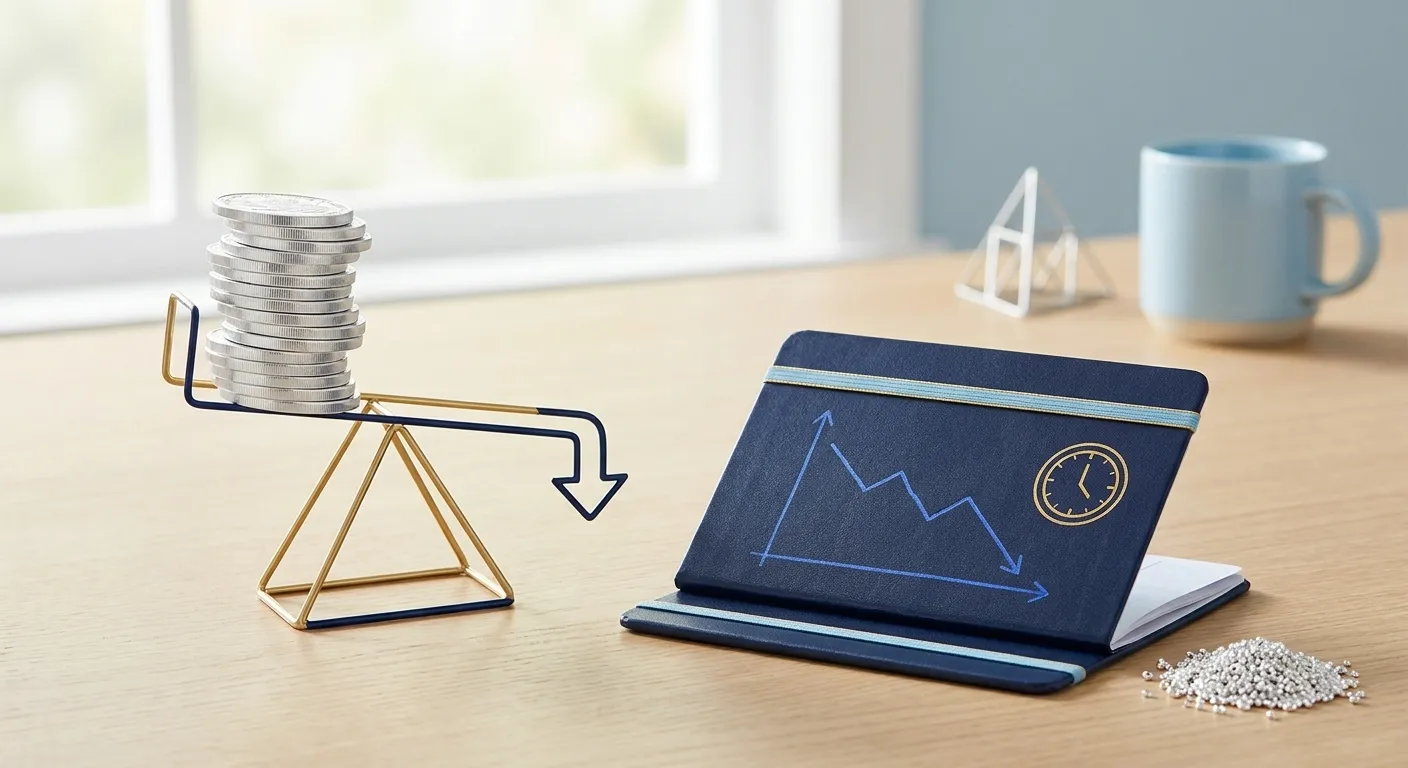
For cautious savers new to precious metals, understanding the forces that influence silver’s value is key. One significant, yet often overlooked, factor is the relationship between Interest Rates Silver Price. While it might seem complex, the connection is quite straightforward and can offer valuable insight into market movements, helping you make more informed decisions about your wealth protection strategy. We believe in providing clear, concise information to empower your financial journey.
Understanding the Inverse Relationship: How Interest Rates Silver Price React
Generally, silver and interest rates share an inverse relationship. When central banks raise interest rates, it typically means that holding cash or interest-bearing assets (like bonds or savings accounts) becomes more attractive. Consequently, higher interest rates make these traditional financial instruments offer better returns, thus increasing their appeal to investors. In this scenario, non-yielding assets like silver, which do not pay interest or dividends, may become less appealing by comparison. Investors might shift funds from silver into assets that now offer a more competitive return, potentially putting downward pressure on silver prices. Conversely, when interest rates are low or falling, interest-bearing assets offer less attractive returns, making non-yielding assets like silver appear more appealing as a store of value. This fundamental dynamic is crucial for understanding precious metal markets.
Why Rising Rates Can Impact Silver’s Appeal
Consider Sarah, the cautious saver. If her savings account suddenly offers a higher interest rate, she might be less inclined to put new money into silver, especially if she’s weighing short-term returns. This simple dynamic plays out on a larger scale across global markets. Rising interest rates also strengthen the domestic currency, for example, the US dollar. Since silver is priced in US dollars, a stronger dollar makes silver more expensive for buyers using other currencies, which can also dampen demand and impact its price. Keeping an eye on central bank announcements and economic forecasts for interest rates can provide a clearer picture of potential future trends for silver prices. Therefore, monitoring these economic indicators is a valuable practice for any saver.
Understanding how interest rates influence silver prices helps you anticipate market shifts. It’s one more piece of the puzzle that empowers you, as a cautious saver, to navigate the precious metals market with greater confidence and strategically protect your financial future. This knowledge is essential for long-term wealth preservation.
The Core Principle: Opportunity Cost and Silver’s Value
The concept of opportunity cost is central to understanding the relationship between Interest Rates Silver Price. Opportunity cost refers to the potential benefits an individual, investor, or business misses out on when choosing one alternative over another. For instance, if you choose to invest in silver, the opportunity cost is the return you could have earned by investing that same money in an interest-bearing savings account or a bond. Similarly, if interest rates on these alternative assets rise, the opportunity cost of holding silver increases. This makes silver less attractive as a direct investment for generating income, as it doesn’t offer a yield. As a result, some investors may reallocate their portfolios towards assets that now offer a higher return, affecting the overall demand for silver. This shift in investor preference directly impacts the market.
The Role of Inflation and Real Interest Rates
While nominal interest rates (the rates you actually see) are important, it’s the ‘real’ interest rates that often have a more profound impact on the silver market. Real interest rates are calculated by subtracting the inflation rate from the nominal interest rate. For example, if your savings account offers a 5% interest rate, but inflation is 3%, your real return is only 2%. When real interest rates are low or negative, the purchasing power of cash erodes over time. In such an environment, non-yielding assets like silver become more appealing as a hedge against inflation. People seek to preserve their wealth, and silver, historically, has been seen as a reliable store of value when traditional currencies lose their buying power. This is a critical point for savers to consider when evaluating their options.
Conversely, when real interest rates are high, holding cash or interest-bearing assets provides a better return after accounting for inflation. This makes silver less attractive as an inflation hedge. Therefore, monitoring inflation figures alongside interest rate announcements is crucial for a comprehensive understanding of silver’s potential movements. The interplay between these factors can be complex, but understanding the basics empowers you.
Central Bank Policies and Their Impact on Silver
Central banks, such as the Federal Reserve in the United States, play a pivotal role in setting interest rate policies. Their decisions are based on economic indicators like inflation, employment rates, and economic growth. When central banks aim to cool down an overheating economy or combat high inflation, they typically raise interest rates. This makes borrowing more expensive and encourages saving, thereby slowing down economic activity. Consequently, such actions can strengthen the national currency and increase the opportunity cost of holding silver, potentially pushing the Interest Rates Silver Price downward. You can learn more about economic pressures and debt that influence these policies by reviewing discussions on financial repression.
Quantitative Easing and Tightening
Beyond simply raising or lowering their benchmark interest rates, central banks also employ tools like quantitative easing (QE) and quantitative tightening (QT). Quantitative easing involves injecting money into the economy by purchasing government bonds and other assets, which typically drives down long-term interest rates and can be bullish for precious metals. This is because it increases the money supply and can lead to inflation, making silver a more attractive store of value. On the other hand, quantitative tightening involves reducing the central bank’s balance sheet, which generally leads to higher interest rates and can be bearish for silver. Therefore, understanding these broader monetary policies is key to anticipating shifts in the Interest Rates Silver Price.
The US Dollar’s Influence on Silver Prices
As mentioned, silver is predominantly priced in US dollars on international markets. This means that the strength or weakness of the dollar significantly impacts silver’s affordability for buyers using other currencies. When interest rates in the US rise, it often makes dollar-denominated assets more attractive, leading to increased demand for the dollar. A stronger dollar, in turn, makes silver more expensive for international buyers, potentially reducing demand and exerting downward pressure on its price. Conversely, when US interest rates are low or falling, the dollar may weaken, making silver cheaper for international buyers and potentially increasing demand. This relationship highlights why global economic conditions and currency valuations are just as important as domestic interest rate policies when considering the outlook for silver. For further insights on market dynamics, you may find discussions on technical scoops valuable.
Global Economic Factors and Silver’s Safe-Haven Appeal
While interest rates are a primary driver, it’s also important to remember that silver is considered a safe-haven asset, especially during times of economic uncertainty or geopolitical instability. When global markets are turbulent, investors often flock to precious metals, including silver, as a store of value, regardless of prevailing interest rates. For example, during periods of high inflation or banking crises, the demand for silver can surge as people seek to protect their wealth from currency devaluation or financial system instability. This safe-haven demand can sometimes counteract the negative effects of rising interest rates on the Interest Rates Silver Price. It is a testament to silver’s enduring role in diversification. Insights into the broader economic landscape, such as the impact of AI boom on metals and debt, can also provide context for silver’s performance.
Practical Implications for Savers and Investors
For cautious savers and those new to precious metals, understanding the connection between Interest Rates Silver Price isn’t about predicting daily fluctuations, but rather about forming a more robust long-term strategy. When interest rates are rising, it’s a good time to reassess your portfolio and consider if your allocation to silver still aligns with your overall financial goals. Perhaps you might find interest-bearing assets more appealing for a portion of your funds. Conversely, during periods of low or falling rates, silver’s appeal as a store of value tends to increase, making it a potentially attractive option for wealth preservation. Keeping abreast of these trends helps you make proactive decisions.
Diversification and Long-Term Perspective
Ultimately, silver should be viewed as a component of a diversified portfolio, not the sole investment. Its role is often to provide a hedge against inflation and economic uncertainty, complementing other assets like stocks, bonds, and real estate. The relationship between Interest Rates Silver Price is one factor among many that influence its value, including industrial demand, mining supply, and geopolitical events. For example, industrial demand for silver is significant, as it’s used in electronics, solar panels, and medical applications. This industrial utility provides a floor for its price that pure monetary metals might not have. Therefore, a long-term perspective, focusing on wealth preservation and diversification, is often the most prudent approach for precious metals investors. You can also explore expert opinions on silver’s future, such as Peter Krauth’s predictions.
Conclusion: Navigating Silver with Confidence
The relationship between Interest Rates Silver Price is a fundamental concept for anyone looking to understand the precious metals market. While generally inverse, this dynamic is influenced by a complex interplay of real interest rates, inflation, central bank policies, and the strength of the US dollar. For cautious savers, grasping these connections empowers you to make more informed decisions about incorporating silver into your wealth protection strategy. By monitoring economic indicators and understanding the underlying principles, you can approach the silver market with greater clarity and confidence. Silver Spot Prices is committed to providing you with the knowledge needed to navigate these waters effectively, ensuring you feel supported and informed every step of the way. We encourage you to continue learning and building a resilient financial future.
Frequently Asked Questions About Silver and Interest Rates
How do higher interest rates affect the value of silver?
Higher interest rates typically make interest-bearing assets like savings accounts or bonds more attractive. Since silver doesn’t pay interest, its appeal as an investment for generating income can decrease, potentially leading to downward pressure on its price. This is due to the increased opportunity cost of holding a non-yielding asset.
What are ‘real’ interest rates and why are they important for silver?
Real interest rates are nominal interest rates minus the inflation rate. They are crucial because they reflect the true return on an investment after accounting for the erosion of purchasing power. When real interest rates are low or negative, silver tends to be more attractive as a hedge against inflation, as the purchasing power of cash is declining.
Does a strong US dollar always mean lower silver prices?
Generally, a stronger US dollar can make silver more expensive for international buyers, potentially dampening demand and putting downward pressure on its price. However, this is not always a direct one-to-one relationship, as other factors like global demand, supply, and safe-haven appeal can also influence silver’s value.
How do central banks influence the price of silver through interest rates?
Central banks set benchmark interest rates to manage economic conditions. When they raise rates, it can strengthen the national currency and increase the opportunity cost of holding silver. Conversely, lowering rates can weaken the currency and make silver more appealing. Their actions directly impact the broader financial landscape.
Should I adjust my silver investments based on interest rate changes?
While interest rate changes are an important factor, they should be considered as part of a broader investment strategy. For cautious savers, silver is often a long-term wealth preservation tool. It’s wise to review your overall portfolio periodically and ensure your allocation to precious metals aligns with your financial goals and risk tolerance, taking into account various market indicators.
Related reading:

