

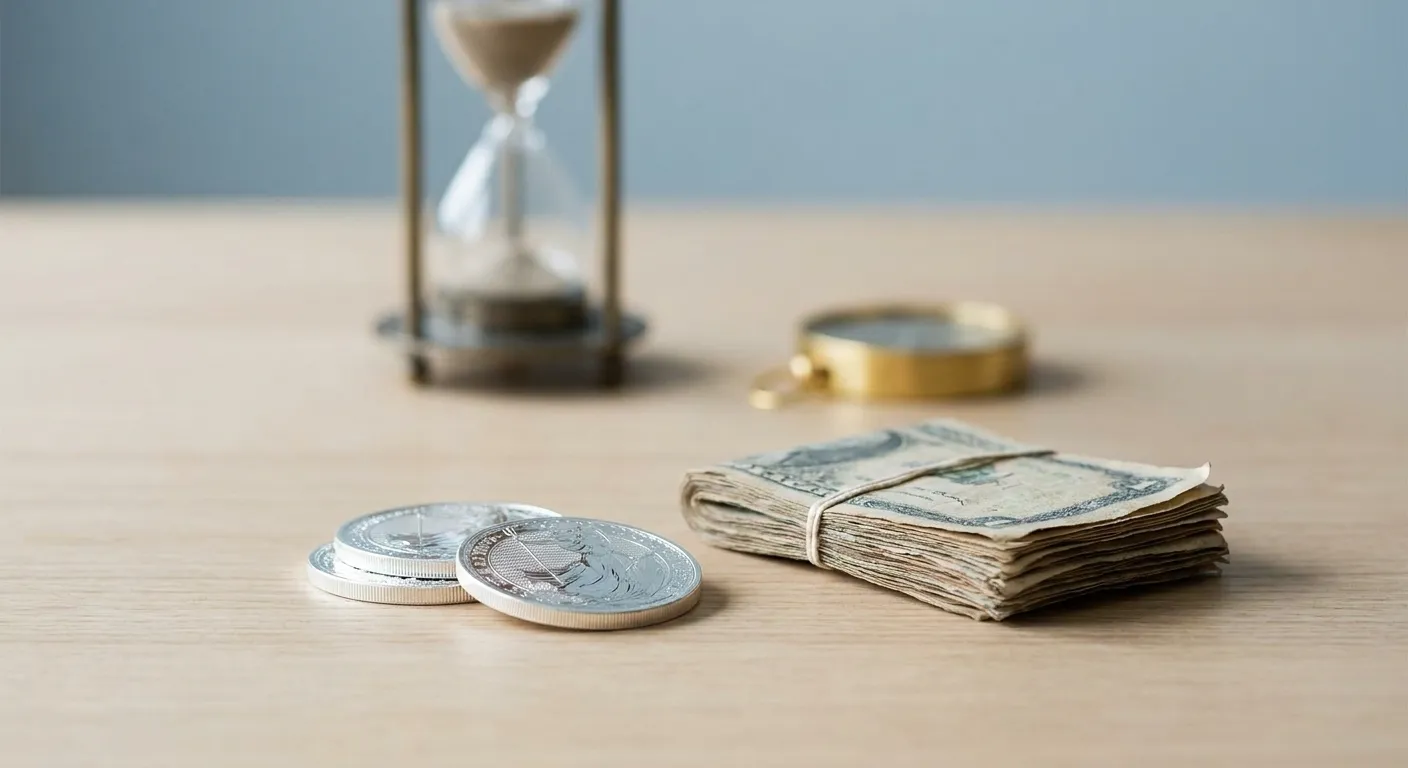
For cautious savers like Sarah, understanding silver’s inflation hedge role is crucial in today’s unpredictable economy. Many professionals with stable jobs, like Sarah, are increasingly concerned about long-term financial security and how to protect their hard-earned savings from the silent erosion of inflation. At Silver Spot Prices, we believe that understanding these fundamental economic forces is the first step towards confident wealth preservation. Silver has historically served as a reliable safeguard against economic instability, a role that remains highly relevant amidst recent market dynamics.
Why Inflation Matters to Your Savings
Inflation is simply the rate at which the general level of prices for goods and services is rising, and consequently, the purchasing power of currency is falling. If your savings aren’t growing at least as fast as inflation, their real value is decreasing. This can be a significant worry for anyone planning for retirement or simply aiming to maintain their current lifestyle in the future. In an environment where traditional savings accounts might offer meager returns, the search for assets that can preserve or even grow wealth becomes paramount. This is where silver, with its unique economic properties, comes into play as a potential economic buffer.
Silver as an Inflation Shield
Historically, precious metals like silver have been sought after during periods of high or rising inflation. This is because silver is a tangible asset, not subject to the same inflationary pressures as fiat currencies. When the value of paper money declines, the intrinsic value of physical commodities often rises in response. For example, the weakening US dollar in 2025 and early 2026 was a significant catalyst for silver’s rally, demonstrating its responsiveness to currency movements and broader economic shifts. Investors turn to silver as inflation protection, seeking refuge from eroding purchasing power.
Beyond just inflation, silver also offers a safe-haven appeal during times of geopolitical instability and US policy uncertainty. When global markets are volatile, investors often flock to assets perceived as stable and secure, and silver consistently proves to be one such asset. This makes silver’s economic buffer capabilities particularly attractive to cautious savers looking for stability.
Understanding Market Dynamics: Supply, Demand, and Price
The current silver market illustrates its resilience. The industry has been characterized by persistent supply deficits, with a sixth consecutive annual deficit projected for 2026 at 46.3 million ounces, widening from 40.3 million in 2025. This structural imbalance, where demand consistently outstrips mine supply, creates upward pressure on prices. Industrial demand, consuming approximately 60% of annual global silver production, is a critical component. Key sectors like solar photovoltaics and electric vehicles increasingly rely on silver, driving up its demand. This sustained demand, coupled with constrained supply, reinforces silver’s position as a valuable asset.
Furthermore, understanding the supply and demand dynamics is essential for anyone considering silver for wealth preservation. Mine supply has struggled to keep pace with the increasing industrial and investment needs. This trend suggests a foundational strength in silver’s market pricing. The ongoing deficits, as detailed in reports like Silver: 46.3 Million Oz Deficit — The Float Is Already Thinning, highlight a tightening market. Consequently, many analysts predict a continued upward trajectory for silver prices, making its role as an inflation hedge even more significant.
Why Tangible Assets Offer Stability
In times of economic uncertainty, the appeal of tangible assets becomes undeniable. Unlike paper currencies or digital assets, physical silver cannot be printed or created at will by central banks. Its value is inherent, derived from its limited supply and diverse applications. This intrinsic value provides a foundational stability that many other assets lack. For individuals concerned about the long-term erosion of their purchasing power, holding physical silver offers a direct countermeasure. It acts as a store of value, preserving wealth across generations.
Moreover, the historical precedent for precious metals as safe havens is well-documented. Throughout history, civilizations have turned to gold and silver during periods of war, economic collapse, and hyperinflation. This enduring trust underscores their reliability. Therefore, considering silver as a protector of wealth is not merely a modern investment strategy but a time-tested principle of financial prudence. This historical performance strengthens the case for silver’s inflation hedge role.
The Impact of Global Debt and Financial Repression
The global economic landscape is currently marked by unprecedented levels of debt. Governments worldwide have accumulated massive obligations, leading to policies of financial repression. This involves keeping interest rates artificially low, often below the rate of inflation, to reduce the real value of government debt. For savers, this means that their money in traditional bank accounts is effectively losing purchasing power over time. This environment makes finding effective strategies for wealth preservation absolutely critical. The article 40 Trillion in Debt and Financial Repression Is the Only Exit sheds more light on this pressing issue.
In such a climate, assets that are independent of government fiscal policies become particularly attractive. Silver, as a physical commodity, stands apart from the monetary system’s vulnerabilities. Its value is not dictated by central bank decisions to print more money or manipulate interest rates. Consequently, including silver in a diversified portfolio can offer a buffer against these systemic risks. This independence is a core reason why many consider silver an effective inflation countermeasure.
Silver’s Diverse Industrial Demand
Beyond its monetary and investment appeal, silver boasts significant industrial demand. Roughly 60% of annual silver production is consumed by various industries, making it an indispensable component in modern technology. This dual demand – both as an investment and an industrial metal – provides a unique floor to its price. Key sectors driving this demand include solar energy, where silver is crucial for photovoltaic cells, and the electronics industry, where its high conductivity is essential. The rise of new technologies, particularly those related to artificial intelligence, further solidifies this demand. For instance, the discussion around The AI Boom Runs on Metals, Mines, and Massive Debt highlights the increasing reliance on such metals.
The growth in green energy initiatives and technological advancements ensures a consistent baseline demand for silver, regardless of economic cycles. This industrial utility differentiates silver from other purely monetary assets. Therefore, its intrinsic value is supported not only by investment sentiment but also by its essential role in global manufacturing. This robust industrial base contributes significantly to silver’s inflation hedge properties, offering another layer of stability.
Navigating Market Volatility with Silver
Market volatility is a constant feature of the global economy, driven by geopolitical events, policy shifts, and unforeseen crises. During such periods, investors often seek safe-haven assets to protect their capital. Silver has a proven track record of performing well when traditional markets experience downturns. Its role as a counter-cyclical asset can help balance a portfolio, mitigating losses during periods of instability. For example, during times of a weakening dollar, silver often strengthens, as indicated by analyses like Technical Scoop: Perking Oil, Gold Soar, Dollar Dive.
Furthermore, silver’s responsiveness to currency movements and broader economic shifts makes it an important asset for diversification. It provides a hedge against the depreciation of fiat currencies. Consequently, including silver in an investment strategy can help reduce overall portfolio risk. This ability to act as a safe harbor during turbulent times is a key aspect of silver’s inflation hedge role and its appeal to cautious investors.
The Future Outlook for Silver
Considering the ongoing supply deficits and robust demand, the future outlook for silver appears strong. Analysts like Peter Krauth have made optimistic price predictions, suggesting significant upside potential. These forecasts are based on fundamental market imbalances and the increasing recognition of silver’s value in a changing economic environment. For example, some experts believe silver could reach significant price milestones, as discussed in Peter Krauth Sees Silver Reaching $80 to $85 Before Year-End. Such predictions underscore the growing confidence in silver’s long-term performance.
Moreover, the persistent structural deficits in the silver market are not expected to resolve quickly. New mine discoveries and expansions take considerable time and capital. This means that demand is likely to continue outstripping supply for the foreseeable future, creating a supportive environment for prices. Therefore, for those looking to protect their savings and grow their wealth, silver continues to present a compelling opportunity. Understanding silver’s inflation hedge role becomes even more critical in light of these projections.
Diversifying Your Portfolio with Silver
Diversification is a fundamental principle of sound financial planning. It involves spreading investments across various asset classes to reduce risk. Including silver in a diversified portfolio offers unique benefits, particularly in mitigating inflation risk. Unlike stocks or bonds, silver’s value is less correlated with traditional financial markets, providing a valuable counterbalance. This means that when other assets might be struggling, silver could be performing well, thus smoothing out overall portfolio returns.
Furthermore, for those new to precious metals, silver offers a more accessible entry point compared to gold, often at a lower price per ounce. This makes it an attractive option for budget-conscious investors seeking to begin their journey in wealth protection. By adding silver, individuals can enhance their portfolio’s resilience against economic shocks and currency debasement. This careful consideration of silver’s inflation hedge role can significantly strengthen a financial strategy.
Conclusion: Embracing Silver for Financial Security
In an economic landscape characterized by inflation, global debt, and market volatility, understanding how to protect your savings is more important than ever. Silver’s inflation hedge role offers a proven and accessible solution for individuals seeking to preserve and grow their wealth. Its historical performance as a safe haven, coupled with robust industrial demand and persistent supply deficits, positions silver as a critical asset for financial security.
At Silver Spot Prices, we encourage you to explore the benefits of including silver in your financial planning. By understanding its unique properties and market dynamics, you can make informed decisions to safeguard your future. Silver provides a tangible, reliable asset that stands firm against the erosive forces of inflation, empowering you to navigate economic uncertainties with confidence. Embrace the stability that silver offers and secure your financial peace of mind.
FAQ
What does it mean for silver to act as a hedge against rising prices?
Silver acts as a hedge against rising prices by maintaining or increasing its purchasing power when the value of fiat currencies declines due to inflation. Because it is a tangible asset with intrinsic value, its price tends to rise when the cost of goods and services increases, helping to preserve your wealth.
How has silver historically performed during periods of high inflation?
Historically, silver has demonstrated a strong tendency to perform well during periods of high or rising inflation. When the purchasing power of paper money diminishes, investors often flock to precious metals like silver, driving up their value as a store of wealth.
Is physical silver better than silver ETFs for protection against inflation?
For direct protection against inflation, many prefer physical silver over silver ETFs. Physical silver offers direct ownership of a tangible asset, removing counterparty risk associated with paper assets. ETFs, while convenient, represent shares in a fund that holds silver, not direct ownership of the metal itself.
What factors contribute to silver’s ability to preserve wealth?
Several factors contribute to silver’s ability to preserve wealth: its status as a tangible asset, its limited supply, its diverse industrial demand (especially in growing sectors like solar and electronics), and its historical role as a safe haven during economic and geopolitical instability. These elements collectively support its value.
How can new investors start investing in silver for wealth preservation?
New investors can begin investing in silver for wealth preservation by purchasing physical silver in forms like coins or bars from reputable dealers. It’s advisable to start with smaller amounts, understand storage options, and gradually build a position as part of a diversified investment strategy. Education about market dynamics is also key.
Related reading:

