

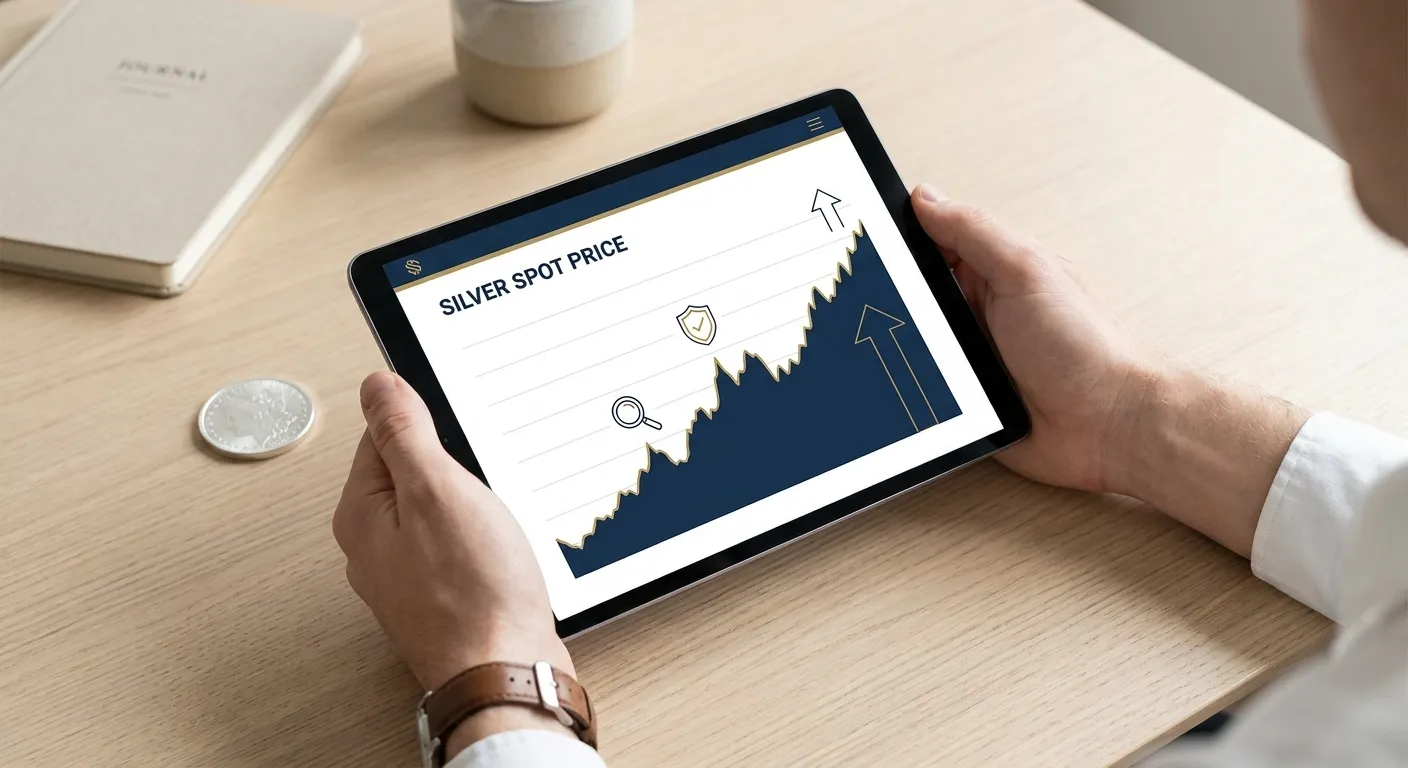
For cautious savers like Sarah, understanding the nuances of precious metals investing can feel overwhelming. Yet, grasping fundamental concepts, such as how to track silver spot price, is crucial for confidently protecting and growing wealth. The silver spot price is the current market price at which silver can be bought or sold for immediate delivery. This is the baseline value from which all other silver products derive their pricing, making it a cornerstone for informed decisions.
This article will demystify the silver spot price, explain its significance, and provide practical ways for you to monitor its movements effectively. Empowering yourself with this knowledge means you can approach silver investing with clarity and confidence, rather than confusion. Consequently, you can make more informed decisions about your financial future.
What Exactly Is the Silver Spot Price?
The silver spot price represents the price of one troy ounce of silver, ready for immediate exchange. This price is determined by global supply and demand dynamics, primarily through futures contracts traded on major commodity exchanges around the world, such as the COMEX in New York and the London Bullion Market Association (LBMA). Unlike the price you might pay for a silver coin or bar from a dealer, the spot price doesn’t include premiums for manufacturing, shipping, or dealer markups. It’s the raw, underlying value of the metal itself. Therefore, it’s a pure reflection of market sentiment.
For investors, especially those new to precious metals, understanding this distinction is vital. When you see news reports about silver’s daily performance, they are almost always referring to the spot price. It serves as a benchmark for the global silver market, reflecting real-time sentiment and economic factors. Moreover, it’s the foundation for pricing physical silver products, even if the final price includes additional costs.
How to Track Silver Spot Price in Real-Time
Monitoring the silver spot price has never been easier, thanks to a wealth of online resources. Here’s how you can effectively keep an eye on its movements:
- Reputable Financial News Websites: Major financial news outlets (e.g., Bloomberg, Reuters, Wall Street Journal) often provide real-time or near real-time spot prices for silver, gold, and other commodities. These sources are generally reliable and widely used.
- Precious Metals Dealer Websites: Most established online precious metals dealers offer live spot price feeds directly on their homepages. This can be particularly useful as it often shows bid and ask prices, giving you a clearer picture of the spread.
- Specialized Commodity Tracking Apps: Many mobile applications are designed specifically for tracking commodity prices. These apps can offer customizable alerts, historical charts, and news feeds related to silver.
- Exchange Websites: For the most direct data, you can visit the websites of commodity exchanges like the COMEX, though their interfaces might be more complex for beginners.
When tracking, pay attention to the charts. They often show price movements over different timeframes (daily, weekly, monthly, yearly). Furthermore, understanding these trends helps you anticipate potential shifts. For example, a consistent upward trend might signal increasing demand, whereas a downward trend could indicate profit-taking or decreased interest. To truly understand the market, one must consistently track silver spot price movements.
Factors Influencing Silver’s Value
The price of silver is not static; it responds to a variety of global influences. Understanding these factors can help you interpret price movements and make more informed decisions when you track silver’s value.
Supply and Demand Dynamics
Like any commodity, silver’s price is heavily influenced by the balance between its supply and demand. Industrial demand plays a significant role, as silver is a critical component in electronics, solar panels, and medical devices. Consequently, economic growth often translates to higher industrial demand for silver. Investment demand, on the other hand, surges during times of economic uncertainty or inflation, as investors seek safe-haven assets. Conversely, a decrease in either type of demand can put downward pressure on prices. Consider how a 46.3 million oz deficit in silver supply could impact its value.
Economic Indicators
Macroeconomic data significantly impacts silver prices. Inflation, for instance, often makes precious metals more attractive as a hedge against the eroding purchasing power of fiat currencies. Interest rates also play a role; higher rates can increase the opportunity cost of holding non-yielding assets like silver, potentially leading to lower demand. Meanwhile, a weaker U.S. dollar typically makes dollar-denominated commodities like silver more affordable for international buyers, boosting demand. This is why many investors are concerned about trillions in debt and financial repression.
Geopolitical Events
Global instability, political tensions, and conflicts can significantly impact silver prices. During periods of geopolitical uncertainty, investors often flock to safe-haven assets, driving up the price of silver. This flight to safety can be a powerful short-term catalyst for price increases, even if the underlying economic fundamentals remain unchanged. Therefore, staying informed about world events is crucial for understanding sudden price shifts.
Monetary Policy Decisions
Central bank policies, particularly those of the U.S. Federal Reserve, have a profound effect on silver prices. Quantitative easing, for example, can lead to increased money supply and inflation concerns, which typically benefit silver. Conversely, tightening monetary policy, such as raising interest rates, can make silver less appealing. These policy shifts are closely watched by market participants and can cause significant price volatility. Learning to track silver spot price movements in relation to these policies is a valuable skill.
Understanding Premiums and Discounts
When you buy or sell physical silver, the price you encounter will almost always differ from the raw silver spot price. This difference is due to premiums and, less commonly, discounts. A premium is an additional cost added to the spot price, while a discount means selling below spot, which is rare for buyers but can happen for sellers in specific situations.
What Are Premiums?
Premiums cover the costs associated with transforming raw silver into a marketable product. These include:
- Fabrication Costs: The expense of minting coins, casting bars, or creating other silver products.
- Dealer Markups: The profit margin for the dealer selling the silver.
- Shipping and Insurance: Costs to transport and protect the physical metal.
- Storage Fees: If you’re buying allocated or unallocated silver from a vault, there might be storage fees.
- Rarity and Collectibility: For certain numismatic coins or limited-edition items, the premium can be significantly higher due to collector demand, far exceeding the intrinsic metal value.
It’s important to remember that these premiums are a normal part of buying physical silver. They vary based on the product type, dealer, and current market conditions. Consequently, comparing premiums across different dealers is a smart strategy.
When Do Discounts Occur?
Discounts on physical silver (selling below spot price) are less common, especially for buyers. However, they can sometimes occur in specific scenarios:
- Distressed Sales: An individual or entity needing to sell a large quantity of silver quickly might offer a slight discount to facilitate a rapid transaction.
- Large Volume Wholesale: Very large institutional buyers might negotiate slight discounts on massive purchases.
- Damaged or Imperfect Items: Silver products with significant damage or imperfections might sell at a discount, although this is more about the item’s condition than a true spot discount.
For the average investor, expect to pay a premium over the silver spot price when purchasing physical metal. The key is to understand what a reasonable premium looks like for the product you’re interested in.
Why Tracking Silver’s Value Matters for You
Knowing how to track silver spot price isn’t just for seasoned traders; it’s a fundamental skill for anyone considering precious metals. This knowledge empowers you to make informed decisions and safeguard your financial well-being.
Informed Purchase Decisions
By monitoring the silver spot price, you gain a clear understanding of the metal’s underlying value. This helps you determine if the premiums on physical products are reasonable. You can identify opportune times to buy when the spot price is favorable, helping you get more silver for your money. For instance, you wouldn’t want to buy when the price is artificially inflated without understanding why. This allows you to make strategic purchases.
Understanding Your Investment’s Value
If you already own silver, tracking its current value is essential for assessing your portfolio. It allows you to calculate the approximate worth of your holdings in real-time, helping you decide when to hold or when to potentially sell. This continuous evaluation is a core aspect of responsible investing. Furthermore, it helps you understand the true performance of your assets. Knowing how to track silver spot price allows for accurate portfolio valuation.
Wealth Protection and Diversification
Many individuals turn to silver as a hedge against inflation and economic uncertainty. By understanding its market movements, you can better utilize silver for wealth protection and portfolio diversification. Observing how silver reacts to economic news, for example, provides insight into its role as a safe-haven asset. It’s important to note how bullion banks understand gold and silver.
Spotting Trends and Opportunities
Consistent monitoring helps you identify long-term trends and potential buying or selling opportunities. While we don’t advocate for day trading, recognizing broader market movements can inform your long-term strategy. Perhaps you notice a sustained dip, indicating a potential buying opportunity for long-term holders. Conversely, a significant surge might prompt you to re-evaluate your allocation. Therefore, learning to track silver spot price is a skill that yields benefits over time.
Tips for Effective Silver Price Monitoring
To make the most of your efforts to track silver spot price, consider these practical tips:
- Use Multiple Sources: Relying on a single source might give you an incomplete picture. Cross-reference prices from several reputable websites or apps to ensure accuracy. This provides a more balanced view of the market.
- Understand Time Zones: Commodity markets operate globally, meaning prices are constantly moving. Be aware of the time zones of the exchanges you are tracking, especially if you’re looking at specific market open and close times.
- Look Beyond the Daily Fluctuation: While daily movements can be interesting, focus on broader trends (weekly, monthly, yearly charts) for long-term investment decisions. Short-term volatility can be distracting. Remember that silver’s value can reach significant highs over time.
- Stay Informed on News: Economic reports, geopolitical developments, and central bank announcements can all impact silver prices. Keeping up with financial news will help you understand why prices are moving. For example, a sudden rise in inflation reports might explain a spike in silver.
- Set Price Alerts: Many apps and websites allow you to set alerts for specific price levels. This way, you don’t have to constantly check the market; you’ll be notified when silver reaches a price point you’re interested in. This is an efficient way to track silver spot price without constant manual checks.
By integrating these practices, you can develop a more robust and efficient approach to monitoring silver’s value, helping you feel more in control of your precious metals journey.
The Future of Silver Spot Price Tracking
As technology continues to evolve, so too will the methods we use to track silver spot price. We are already seeing advancements that make real-time data more accessible and understandable for the average individual. For example, AI and machine learning are beginning to play a role in predicting market movements, offering more sophisticated insights than ever before. This could mean more personalized alerts and predictive analytics for investors.
Furthermore, the integration of blockchain technology and decentralized finance (DeFi) could introduce new ways to track and trade tokenized precious metals, potentially offering greater transparency and efficiency. While these technologies are still emerging, they hold the promise of making the process of monitoring silver’s value even more seamless and secure in the future. Consequently, staying abreast of technological advancements will be beneficial for investors.
Conclusion
Understanding and knowing how to track silver spot price is a fundamental step for anyone looking to invest in precious metals. It empowers you to make informed decisions, comprehend the true value of your holdings, and navigate the market with confidence. By utilizing reputable sources, understanding market influences, and being aware of premiums, you can approach silver investing with clarity rather than apprehension. Remember, knowledge is your most valuable asset when it comes to protecting and growing your wealth. Continue to educate yourself, remain vigilant, and you will be well-equipped to make sound decisions in the dynamic world of silver.
FAQ
What does ‘silver spot’ mean?
The term ‘silver spot’ refers to the current market price for one troy ounce of silver, available for immediate delivery. It’s the base value before any additional costs like manufacturing or dealer markups are added.
Where can I find real-time silver values?
You can find real-time silver values on reputable financial news websites like Bloomberg or Reuters, specialized precious metals dealer websites, and commodity tracking mobile applications. These sources provide up-to-the-minute data.
Why is the price of physical silver different from the current silver value?
The price of physical silver includes premiums over the current silver value. These premiums cover costs such as fabrication, shipping, insurance, and the dealer’s profit margin. Therefore, the actual price you pay for a coin or bar will be higher than the raw spot price.
What factors cause silver prices to change?
Silver prices change due to a combination of factors including global supply and demand, economic indicators like inflation and interest rates, geopolitical events, and monetary policy decisions by central banks. All these elements influence market sentiment and the metal’s perceived value.
Is it important for new investors to monitor silver’s market value?
Yes, it is very important for new investors to monitor silver’s market value. This helps them make informed purchasing decisions, understand the true worth of their investments, and utilize silver effectively for wealth protection and portfolio diversification. It builds confidence and clarity in their investment journey.
Related reading:

