

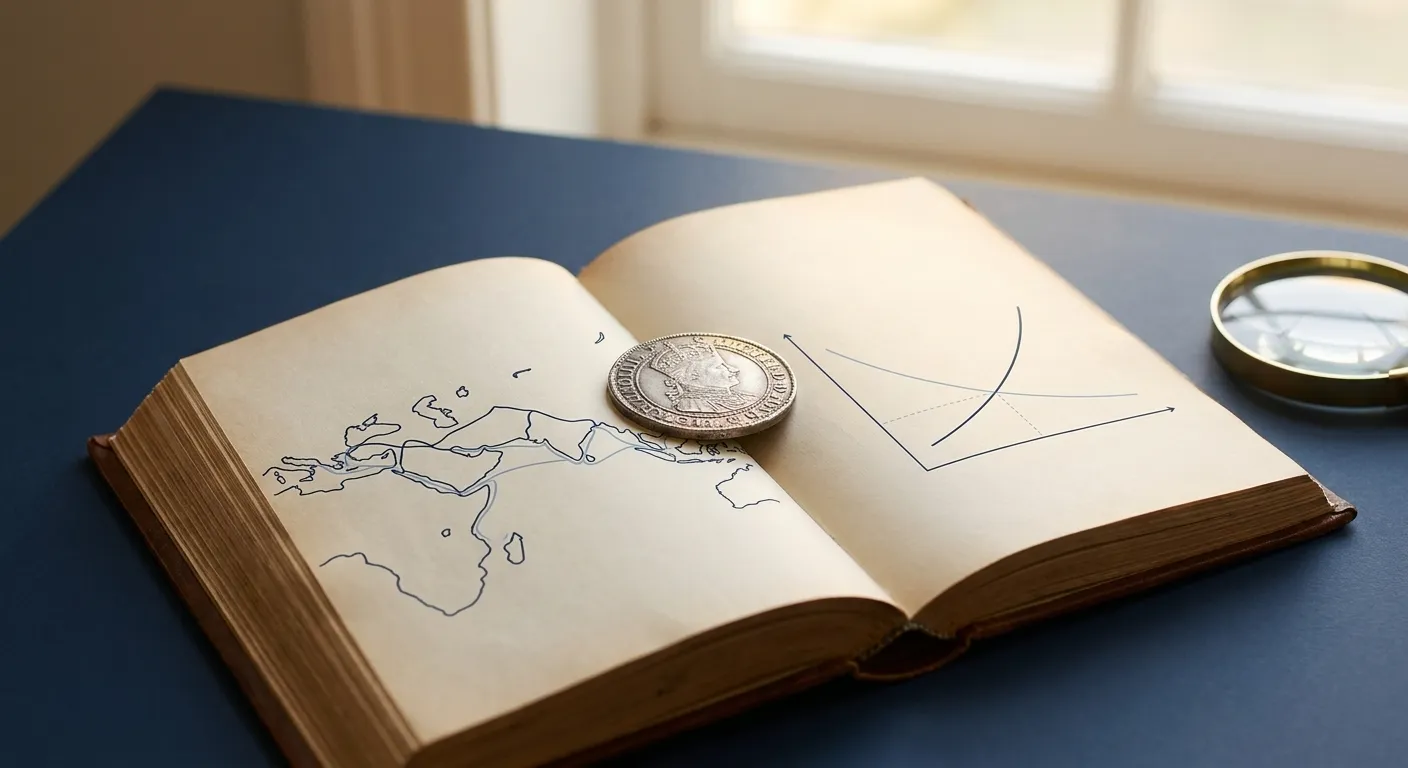
For centuries, silver has captivated humanity, not just for its lustrous beauty, but for its intrinsic worth. As a cautious saver, you might be wondering about the true foundation of precious metals. Understanding silver’s historical value is essential to appreciating its role in today’s financial landscape. It’s more than just a commodity; it’s a tangible asset with a rich past that continues to shape its present and future relevance.
From ancient civilizations to modern economies, silver has served as a bedrock of wealth, a medium of exchange, and a store of value. Its journey through history reveals a consistent pattern of reliability, particularly during times of economic uncertainty. This deep-rooted significance provides a compelling argument for its inclusion in a diversified portfolio.
From Ancient Currencies to Modern Money: The Enduring Role of Silver
Imagine a world without paper currency or digital transactions. For millennia, silver coins were the backbone of trade and commerce across empires. For example, the Roman denarius and the Spanish dollar offered a universally recognized form of wealth. This historical precedent established silver as a trusted and liquid asset, a characteristic it largely retains today. Its consistent use as currency underscores its inherent acceptance and stability.
Indeed, the appeal of physical silver as a medium of exchange is deeply embedded in human history. Many early societies recognized its malleability and scarcity, making it ideal for coinage. Consequently, it facilitated transactions across vast distances and diverse cultures. This foundational role in global commerce highlights the metal’s enduring practical utility.
The Evolution of Silver as Currency
The earliest forms of silver currency date back thousands of years. Lydian staters, for instance, were among the first standardized coins, often containing a mixture of gold and silver known as electrum. Over time, pure silver coins became prevalent, valued for their consistent weight and purity. This standardization was crucial for fostering trust in trade. Therefore, the widespread adoption of silver coinage significantly boosted economic development.
During the Middle Ages, various European kingdoms minted silver pennies and groats, which were vital for everyday transactions. Later, the Spanish eight-real coin, often called the “piece of eight,” became a global currency, circulating widely across continents. Its influence was so profound that it served as the basis for many national currencies, including the U.S. dollar. This global reach further solidified silver’s position as a universally accepted store of value.
Industrial Demand Through the Ages: Beyond Monetary Use
Beyond its monetary role, silver boasts an impressive industrial track record. Its unique properties – high conductivity, malleability, and reflectivity – made it indispensable in everything from jewelry and silverware to early photography and electronics. As technology advanced, so did the demand for silver in new applications, such as solar panels and medical devices. This dual demand, both monetary and industrial, contributes significantly to its intrinsic value and market resilience.
Specifically, silver’s superior electrical conductivity makes it crucial for electronic components. It is used in switches, circuit boards, and conductive pastes. Furthermore, its excellent thermal conductivity is valued in various industrial processes. These industrial applications consume a significant portion of the annual silver supply, demonstrating its irreplaceable role in modern technology. For example, the rapidly growing AI sector relies heavily on metals, including silver, for its infrastructure. You can learn more about this in our article on The AI Boom Runs on Metals, Mines, and Massive Debt.
Modern Industrial Applications Driving Silver’s Worth
Today, silver’s industrial demand is more diverse than ever. Solar energy, for instance, is a major consumer, utilizing silver paste in photovoltaic cells to convert sunlight into electricity. In fact, the growth of renewable energy sources is projected to increase this demand significantly. Moreover, the medical field uses silver for its antimicrobial properties in wound dressings and medical instruments. The automotive industry also incorporates silver in electrical contacts and sensors.
Additionally, the burgeoning field of 5G technology requires substantial amounts of silver for its components, given its need for high-speed data transmission. These technological advancements ensure that industrial demand for silver remains strong, providing a fundamental underpinning for its market price. Consequently, understanding these diverse applications helps illustrate why silver is a vital commodity, not just a precious metal.
Economic Drivers: What Gives Silver Its Worth Today?
While history provides context, current economic forces are what truly drive silver’s value today. Understanding these drivers helps prudent investors make informed decisions about their wealth preservation strategies. Moreover, these economic factors often interact in complex ways, influencing market sentiment and price movements.
Supply and Demand Fundamentals
Like any commodity, silver prices are influenced by the delicate balance of supply and demand. Mine production, recycling efforts, and government stockpiles all contribute to the supply side. On the demand side, industrial applications, investment demand (for physical silver and ETFs), and jewelry consumption play significant roles. Disruptions in either supply or demand can cause significant price fluctuations, making it crucial for investors to monitor these market forces. For instance, a recent report highlighted a significant deficit in the silver market, indicating that the available supply is thinning. This topic is explored further in Silver: 46.3 Million Oz Deficit — The Float Is Already Thinning.
Mine output, a primary component of supply, can be affected by various factors, including geopolitical stability in mining regions, labor disputes, and environmental regulations. Meanwhile, recycling efforts, particularly from electronics and industrial waste, contribute a growing portion of the supply. On the demand side, investment interest can surge during periods of economic uncertainty. For example, many investors turn to physical silver as a tangible asset.
Role as a Safe-Haven Asset
In times of geopolitical instability, economic downturns, or inflationary pressures, investors often flock to safe-haven assets. Silver, alongside gold, has historically performed this role admirably. When confidence in traditional financial systems wavers, the tangible nature of precious metals offers a sense of security. Therefore, silver often sees increased demand during periods of market volatility, demonstrating its appeal as a protective asset.
Historically, silver has maintained its purchasing power through various crises, serving as a reliable store of wealth. This characteristic makes it particularly attractive to those concerned about currency debasement or systemic financial risks. Moreover, its liquidity ensures that it can be readily converted into cash if needed. This attribute enhances its status as a reliable safe haven. The ongoing discussions about 40 Trillion in Debt and Financial Repression Is the Only Exit underscore the importance of such assets.
Inflation Hedges and Currency Devaluation
Another key economic driver for silver’s historical value and its modern appeal is its role as an inflation hedge. When inflation erodes the purchasing power of fiat currencies, precious metals often retain or increase their value. This is because their supply is finite, unlike paper money which can be printed in unlimited quantities. Consequently, many investors include silver in their portfolios specifically to protect against inflationary pressures.
Furthermore, concerns about currency devaluation often lead to increased interest in silver. As governments potentially print more money to stimulate economies, the value of existing currency can decrease. Silver, being a tangible asset, is not subject to the same devaluation risks. Therefore, it provides a valuable safeguard against economic policies that might weaken national currencies. This protection is a significant part of its enduring allure.
Monetary Policy and Interest Rates
Monetary policy, particularly interest rate decisions by central banks, also significantly impacts silver prices. Generally, lower interest rates tend to make non-yielding assets like silver more attractive, as the opportunity cost of holding them decreases. Conversely, higher interest rates can draw investors towards bonds and other interest-bearing assets. However, in an environment of negative real interest rates (where inflation outpaces interest rates), silver’s appeal as a wealth preserver can grow substantially.
The U.S. dollar’s strength also plays a role. Since silver is typically priced in dollars, a weaker dollar can make silver more affordable for international buyers, thus increasing demand and potentially prices. Conversely, a stronger dollar can have the opposite effect. Therefore, monitoring global economic indicators and central bank announcements is crucial for understanding silver’s market movements. This broader economic context is essential for assessing silver’s historical value and future potential.
Geopolitical Factors and Global Stability
Global geopolitical events can exert a strong influence on silver prices. Conflicts, political instability, and trade disputes often lead to increased uncertainty in financial markets. During such times, investors frequently seek the perceived safety of precious metals. This flight to quality can drive up demand for silver, causing its price to rise. For example, a sudden international crisis might prompt a surge in investment in tangible assets.
Moreover, disruptions in major mining regions due to political unrest can impact global supply. This supply constraint, coupled with increased safe-haven demand, can create significant upward pressure on prices. Consequently, geopolitical developments are a vital consideration for anyone looking to understand the dynamics of the silver market. The interplay of these global forces shapes the perception of silver’s intrinsic worth.
Investment Demand: Physical Silver and ETFs
Investment demand is a critical component of silver’s market value. This demand comes in various forms, including physical bullion (coins and bars) and exchange-traded funds (ETFs) that track silver prices. Many individuals prefer physical silver for its tangibility and direct ownership, viewing it as the ultimate form of wealth preservation. Others opt for ETFs for their liquidity and ease of trading. Both contribute to the overall demand for the metal.
The choice between physical silver and silver ETFs often depends on an investor’s goals and risk tolerance. Physical silver provides direct ownership and protection against counterparty risk, while ETFs offer convenience and often lower storage costs. Regardless of the chosen method, increased investment interest signals a recognition of silver’s enduring value and its potential to safeguard wealth. This sustained interest reinforces silver’s historical value as a trusted asset.
The Future Outlook for Silver’s Value
Looking ahead, several factors suggest that silver’s relevance will continue to grow. The ongoing global push towards green energy, especially solar power, will maintain strong industrial demand. Furthermore, advancements in electronics and medical technology will likely create new applications for silver. This consistent industrial consumption provides a robust floor for its price.
Moreover, persistent economic uncertainties, including concerns about inflation and government debt, are likely to sustain investment demand. As central banks navigate complex economic landscapes, the role of safe-haven assets like silver could become even more pronounced. Therefore, for those seeking to protect and diversify their wealth, understanding silver’s historical value and its modern economic drivers offers a clear path forward. Silver stands as a testament to enduring value, offering both a rich past and a promising future.
Conclusion: Silver’s Enduring Legacy
From ancient civilizations that minted it into essential currency to modern industries that rely on its unique properties, silver has consistently proven its worth. Its journey through history is a compelling narrative of resilience, reliability, and intrinsic value. As a medium of exchange, an industrial metal, and a safe-haven asset, silver’s multifaceted utility underpins its enduring appeal. For individuals looking to protect their wealth and diversify their portfolios, understanding the deep roots of silver’s value is not just academic; it’s a practical step toward financial prudence. The legacy of silver continues, offering stability in an ever-changing world.
FAQ
What makes silver a valuable investment?
Silver is considered valuable due to its dual demand: both as a precious metal for investment and as a critical industrial commodity. Its historical role as currency, coupled with its unique physical properties essential for modern technology, underpins its intrinsic worth. Furthermore, it often serves as a safe haven during economic uncertainty.
How has silver been used as currency throughout history?
For thousands of years, silver coins served as a primary form of money across various empires, from the Roman Empire to the Spanish colonial period. Its divisibility, portability, and intrinsic value made it ideal for trade and commerce, establishing it as a universally accepted medium of exchange.
What industrial applications drive silver demand today?
Today, silver is indispensable in numerous industries. Key applications include solar panels, electronics (like switches and circuit boards), medical instruments due to its antimicrobial properties, and photography. The growth of green technologies and advanced electronics continues to fuel its industrial demand.
Why is silver considered a safe-haven asset?
Silver is viewed as a safe-haven asset because it tends to retain its value, or even appreciate, during times of economic instability, geopolitical turmoil, or high inflation. Its tangible nature offers a sense of security when confidence in traditional financial systems or fiat currencies wavers.
How do economic factors influence the price of silver?
Economic factors such as supply and demand fundamentals (mine production vs. industrial and investment demand), interest rates, inflation rates, and the strength of the U.S. dollar significantly impact silver prices. A balanced understanding of these elements is crucial for anticipating market movements and appreciating the metal’s worth.
Related reading:

